
How to Care for a Lawn Through the Year
Lawn care is an ongoing connection with nature that yields great results. In winter, homeowners shield their lawns from harsh weather and prepare tools for spring. As warmer days arrive, they engage in regular mowing, aerating, and fertilizing to promote growth while controlling weeds and moss. In summer, adjusting mower height prevents heat stress, allowing roots to grow deep during droughts. With autumn approaching, the focus shifts to repairing summer damage through seeding and aeration while clearing fallen leaves to allow sunlight to nourish remaining greenery. This cycle creates a lush yard and supports biodiversity.
Winter Lawn Protection and Tool Care
As winter arrives, your lawn enters a dormant state that requires little attention. It’s the ideal time to prepare for a healthy spring. Shield your grass from harsh conditions; avoid walking on frosty or waterlogged lawns as this can damage blades and cause compaction. Use warmer days in December and February to lightly sweep away leaves and debris, this allows sunlight to reach the grass.
Mowing isn’t usually necessary during these cold months, but you may trim overgrown edges when warmer weather arrives, skip this if frost is expected within a day or two. January is perfect for maintaining tools: sharpen mower blades and check spreaders for wear so they’re ready for spring.
Inspecting Your Lawn
Checking your lawn’s condition during dry spells can reveal potential moss growth or areas needing care as temperatures rise; take notes now to prepare for later!
Spring Mowing and Edging Techniques
As the weather warms and growth resumes, spring is your lawn’s season of renewal. Regular mowing begins as the grass thrives; aim for a height that supports strong growth while keeping weeds away. For typical lawns, cutting every two weeks during this season is suggested, but be flexible based on grass growth. Keeping mower blades sharp ensures clean cuts, reducing stress on the plants and aiding recovery between trims. A good rule of thumb is to keep heavily used areas at around 3cm tall in April; taller grass can handle heat better later.
Edging
Edging matters for creating a neat appearance while preventing encroachment into flowerbeds or walkways. Use tools like half-moon edgers or flat-bladed spades to create clear lines along borders, an effective way to maintain tidiness! While you edge, pay attention to compacted areas that might need aeration once you’ve established regular mowing patterns. This preparation enhances visual appeal and sets up care practices for summer when drought conditions may challenge your hard work during these early months.
The Pros & Cons of Year-Round Lawn Care
Pros
-
Keeping up with regular maintenance helps you maintain a tidy and healthy lawn, which can prevent the need for major renovations later on.
-
Tailoring your care tasks to fit local weather patterns and soil conditions makes your lawn more resilient.
-
A varied lawn supports wildlife, aiding in biodiversity and overall ecosystem health.
-
Seasonal chores such as aerating and scarifying boost root growth and improve drainage.
-
Using organic fertilizers promotes soil health while protecting beneficial microbes.
-
Allowing wildflowers to flourish creates habitats for pollinators, enhancing local ecosystems.
Cons
-
Regular mowing and frequent fertilization take a lot of time and effort from the gardener.
-
Using too many synthetic fertilizers can harm the environment and decrease soil fertility over time.
-
Some lawn care methods may increase water usage during dry periods, raising sustainability concerns.
-
Keeping an eye on your lawn regularly can feel overwhelming for those who aren’t experienced in gardening.
-
Certain seasonal tasks might not apply to every type of lawn, which can create confusion about how to care for them properly.
-
Allowing some weeds or moss could clash with traditional lawn looks, leaving some gardeners feeling unsatisfied.
Aeration and Soil Compaction Relief
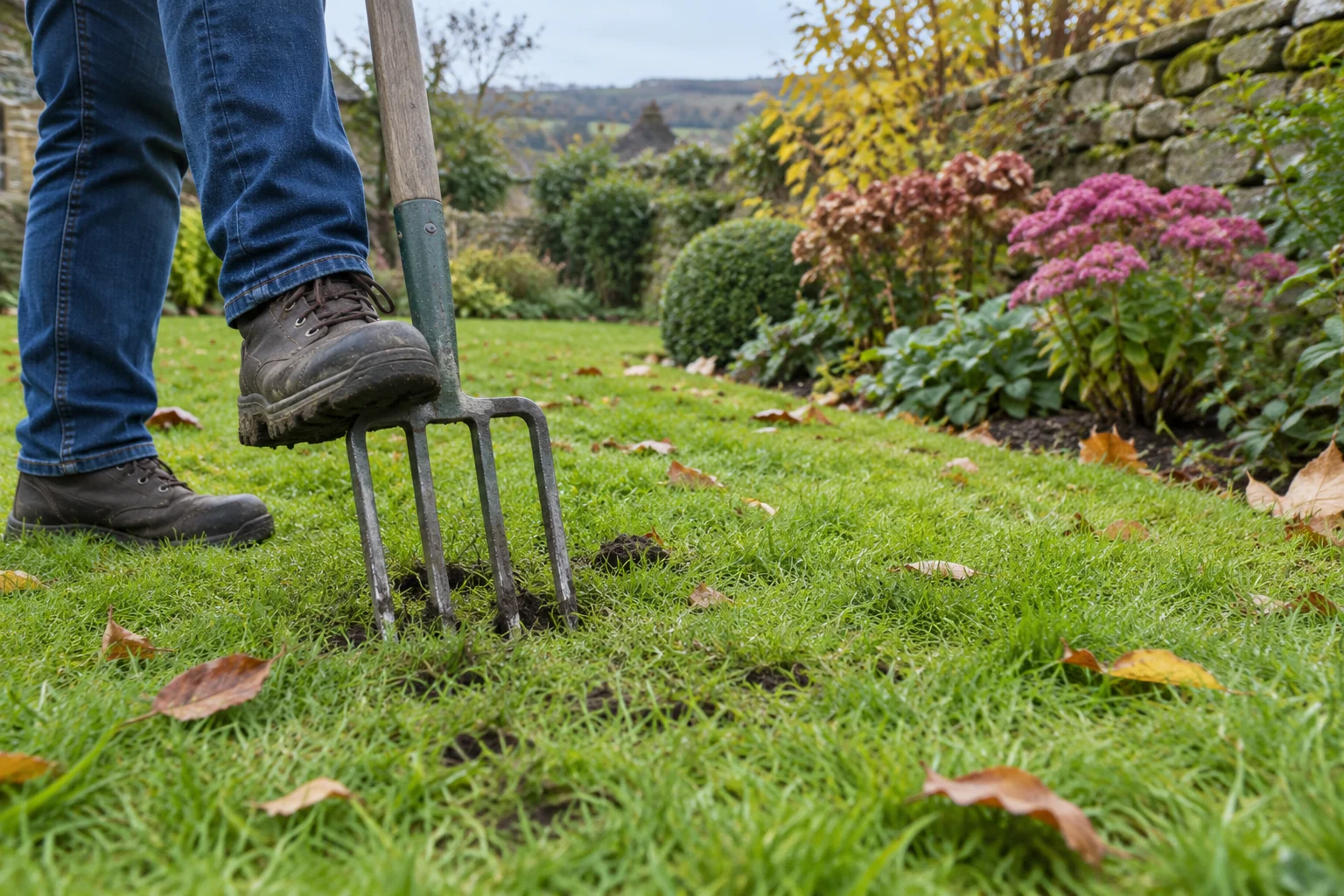
As you move into spring, aeration is an important task to boost your lawn’s health. Aerating the soil helps air, water, and nutrients reach deeper roots, essential for growth during warmer months. In April, use a garden fork or specialized aerator to create holes in compacted areas about every 10 centimeters; gently rocking the handle will help make these holes without harming the surrounding grass.
If your lawn has clay-heavy soil that retains moisture, adding sharp sand or fine horticultural grit into these holes can improve drainage and prevent further compaction. If you notice sponginess when walking across your yard, a sign of moss buildup or thatch, it might be time for scarifying; this process cuts through surface debris while revitalizing grass below by removing excess organic material.
Just remember: timing matters! Doing it too early could stress your turf before it’s fully awake from winter dormancy; focus on nurturing strong roots first before moving on to heavy-duty treatments like scarification in late April when temperatures rise consistently and growth picks up pace.
Feeding Lawns: Fertilizer Options
Spring offers an opportunity for your lawn to revive, making fertilization important as it emerges from winter. While not all lawns require fertilizer, particularly those with wildflowers, common grass varieties benefit significantly from timely applications. When temperatures reach late March or early April, consider using a balanced organic feed that nourishes the soil’s microbial life and provides essential nutrients for grass. Organic options like seaweed extracts or compost support the ecosystem rather than disrupt it.
Moisture Considerations
As you prepare to spread nourishment across your green space, monitor moisture levels. Applying fertilizer before expected rain ensures it soaks into the root zone without risking leaf scorch, a common issue during dry spells. If conditions remain dry after applying synthetic fertilizers, which should be used sparingly due to environmental concerns, water lightly afterward to minimize the risk of burning blades. Your main goal is strong growth and resilience against weeds; by following these practices this spring, you’ll set up for lush greenery by summer!
Seasonal Lawn Care Essentials by Month
| Task/Activity | Winter (Dec-Feb) | Spring (Mar-May) | Summer (Jun-Aug) | Autumn (Sep-Nov) |
|---|---|---|---|---|
| Mowing | Generally unnecessary; avoid if frost is predicted | Begin regular mowing as grass grows, at least once every two weeks | Continue mowing as needed; raise cutting height in dry weather | Gradually raise cutting height; mow as weather allows |
| Aeration | Inspect lawn; avoid walking on wet or frosty grass | Raking and spiking to aerate; suitable conditions needed | Not typically required | Spike to relieve compaction and aid drainage |
| Fertilizing | Not recommended | Optional; apply when rain is forecast | Conditional; avoid during drought | Optional; early autumn feeding suggested |
| Weeding | Hand-weeding not applicable | Hand-remove weeds; selective treatments possible | Hand-remove or treat as necessary | Rake out moss if desired |
| Lawn Repair | Inspect for damage | Repair bare patches by overseeding | Regular watering for newly sown lawns | Last chance to sow seed before winter |
| Leaf Management | Minor task; sweep up leaves | Clear fallen leaves regularly | N/A | Remove fallen leaves to prevent smothering |
| Tool Maintenance | Inspect and maintain tools | N/A | N/A | N/A |
Weeds, Moss, and Thatch Management
Weeds, moss, and thatch can create problems for maintaining a healthy lawn. With the right approach, they can be managed effectively. For a neat all-grass yard, hand-weeding is essential. To remove stubborn dandelions or creeping plantains, use a trowel or daisy grubber to pull out their roots.
If you prefer to encourage biodiversity by allowing wildflowers to grow alongside your grass, consider leaving some unmowed to provide habitat. As spring arrives, watch for signs of moss growth, which often indicates damp conditions or drainage issues. A light raking can help eliminate excess moss and improve air circulation in the turf.
Thatch is another issue; it’s the spongy layer of dead grass and debris above the soil surface. If your lawn feels soft when walked on, you may want to scarify in late April when growth picks up. Be cautious not to stress young blades before they’re ready!
Seasonal Management Techniques
Every season brings its own set of strategies tailored specifically for addressing these challenges based on the type of lawn you’re maintaining. Take time now to evaluate what works best for achieving your landscape goals as summer approaches!
Seeding and Repairing Bare Patches
As the warmer months approach, focus on bare patches in your lawn. Spring is ideal for this because mild temperatures help grass seeds germinate. Check areas needing attention; if they’re small, overseeding may suffice. Lightly rake the soil surface to create a good seedbed, this helps new seeds touch moist soil and prevents them from getting buried under debris. When sowing, choose high-quality grass seed that matches your existing lawn type and follow package instructions for coverage rates.
Larger Areas
For larger spots or significant damage, consider turf repair instead of just seeding. If you have leftover sod or can get fresh pieces from local suppliers, patching bald spots with turf provides quick results. Lay strips about 5cm apart over prepared soil and press them down gently to eliminate air pockets; this allows roots to grow quickly without competition from weeds.
Watering
Keep newly seeded or turfed patches well-watered during dry spells until they’re fully established, consistent moisture will support their success as part of your lush green landscape heading into summer’s heat!
Lawn Care Myths and Surprising Truths Revealed
-
Winter is usually calm for lawn care, with only a few tasks. Avoid walking on wet or frosty grass and check the lawn for problems in February.
-
Mowing isn't typically necessary in winter unless the weather is mild and there's no frost expected within 1-2 days.
-
Many lawns can thrive without extra fertilizing, but fertilizers may help struggling lawns, especially for thick grass cover.
-
Established lawns are usually tough against drought; they might go brown but generally recover when it rains.
-
Letting some plants grow can boost biodiversity and support local wildlife, depending on your lawn goals.
Summer Mowing and Drought Care
When summer hits, maintaining your lawn requires adjusting mowing practices and monitoring drought conditions. Regular mowing is essential for a neat appearance, but during extreme heat, it’s wise to raise the cutting height. This protects the grass from intense sunlight and reduces root stress. In dry conditions, aim for at least 5cm, longer blades retain moisture better and promote deeper root growth. This approach supports your lawn’s ability to withstand heatwaves.
If you’re away or cannot mow frequently, avoid cutting long grass all at once upon your return. Instead, lower it gradually over several mows to prevent shocking the plant and slowing recovery. Consider leaving clippings on the lawn after mowing; they decompose quickly and enrich the soil.
Watering Tips
Established lawns usually don’t need extra watering during dry spells since they’re resilient. Young seedlings require regular watering until their roots reach deep into the ground; use eco-friendly methods like collected rainwater whenever possible instead of relying solely on mains water sources.
Monitoring Your Lawn
As temperatures rise in late summer, watch for signs that indicate when intervention might be necessary for both short- and long-term health benefits of your green space, paying attention now will pay off later!
Wildflower-friendly Lawns: no Mow May
As spring arrives, adopting a wildflower-friendly lawn can transform your outdoor area into a space that supports biodiversity. Starting No Mow May allows you to pause regular mowing and let wildflowers grow naturally. This practice enhances your yard and creates habitats for pollinators like bees and butterflies. By stopping mowing in early May, and ideally keeping it this way until at least August, you help native plants thrive, enabling them to bloom and produce seeds without disruption. You can leave part of your yard unmowed or allow the entire area to grow freely; either approach benefits local ecosystems while providing vibrant seasonal visuals.
This method also helps you understand how different species interact in your green space, some may thrive despite being surrounded by grass! When summer arrives and growth accelerates, consider when to start mowing again: selective mowing will manage tall grasses while preserving colorful flowers that enliven the garden. Observing which areas flourish under these conditions can guide future decisions about designating more spaces as wildflower meadows; every little bit contributes positively to our planet’s vital pollinator populations.
Autumn Repairs and Winter Preparation
As autumn arrives, give your lawn attention to stay healthy through the cold months. Check areas that may have experienced heat stress or wear from foot traffic. If you see bare spots, now is the time for seeding, September offers ideal conditions for grass seed germination. Prepare those areas by raking lightly to loosen the soil and create a suitable seedbed before spreading quality seeds that match your existing lawn type.
Aeration can relieve compaction caused by summer activities; using a garden fork or an aerator will improve water penetration and root growth as you prepare for winter dormancy. As leaves change colors, continue mowing while the weather allows but gradually raise the cutting height, aim for around 3cm in September, to protect grassroots during their last growth phase. Manage fallen leaves by regularly clearing them to prevent suffocation of grass below and allow sunlight to reach the remaining vibrant grass, a crucial step for maintaining lawn health into winter.
Tool Maintenance
With tool maintenance on your list this season, take some time in October or early November to sharpen blades and check equipment functionality so you’re prepared for spring! Keeping these practices in mind supports not just short-term looks but long-lasting health as seasons change, and ensures you’ll be ready for next year’s growing cycle!
Year-round Lawn Care Success
As you reflect on the past year, appreciate how your lawn has grown alongside you. Caring for a green space goes beyond aesthetics; it requires attention and flexibility as seasons change. Each phase, from spring’s growth to autumn’s preparation, plays a crucial role in maintaining a healthy landscape. By engaging with seasonal tasks, you support not just grass but an ecosystem full of life.
Looking forward, consider how this approach can enhance your lawn’s strength and environmental impact. Whether you’ve chosen classic turf or wildflower meadows, remember that every choice encourages biodiversity and provides habitats for pollinators and wildlife. As winter returns, note what worked well in this year’s maintenance: what went smoothly? What could improve? This reflection will guide you into next year with strategies aimed at cultivating a thriving outdoor space where nature flourishes.
FAQ
What should you avoid doing on wet or frosty grass during winter?
In winter, avoid walking on wet or frosty grass to prevent bruising the blades and causing long-term damage like brown spots and compacted soil.
When is the best time to start regular mowing in spring?
Begin mowing in late March when grass starts to grow, and mow at least every two weeks during the season.
How can you improve soil health and encourage strong root growth in your lawn?
To enhance soil health and support root growth, use aeration methods like raking and spiking to improve air and water flow and reduce compaction.
What steps should you take to repair bare patches in your lawn?
To fix bare spots in your lawn, rake and spike the soil, sow seed, rake it into the surface, and keep it moist until established.
How do you know when to stop mowing for the season in autumn?
Stop mowing your lawn in late October when temperatures drop and grass growth slows.